In the global food processing industry, maintaining the texture, shelf-life, and visual appeal of products is a constant challenge. Moisture, oxidation, and clumping can quickly degrade the quality of premium food items. AMS Fine Chemicals, based in the industrial heart of Bhavnagar, Gujarat, provides the solution: High-purity, Food Grade Magnesium Carbonate (MgCO3).
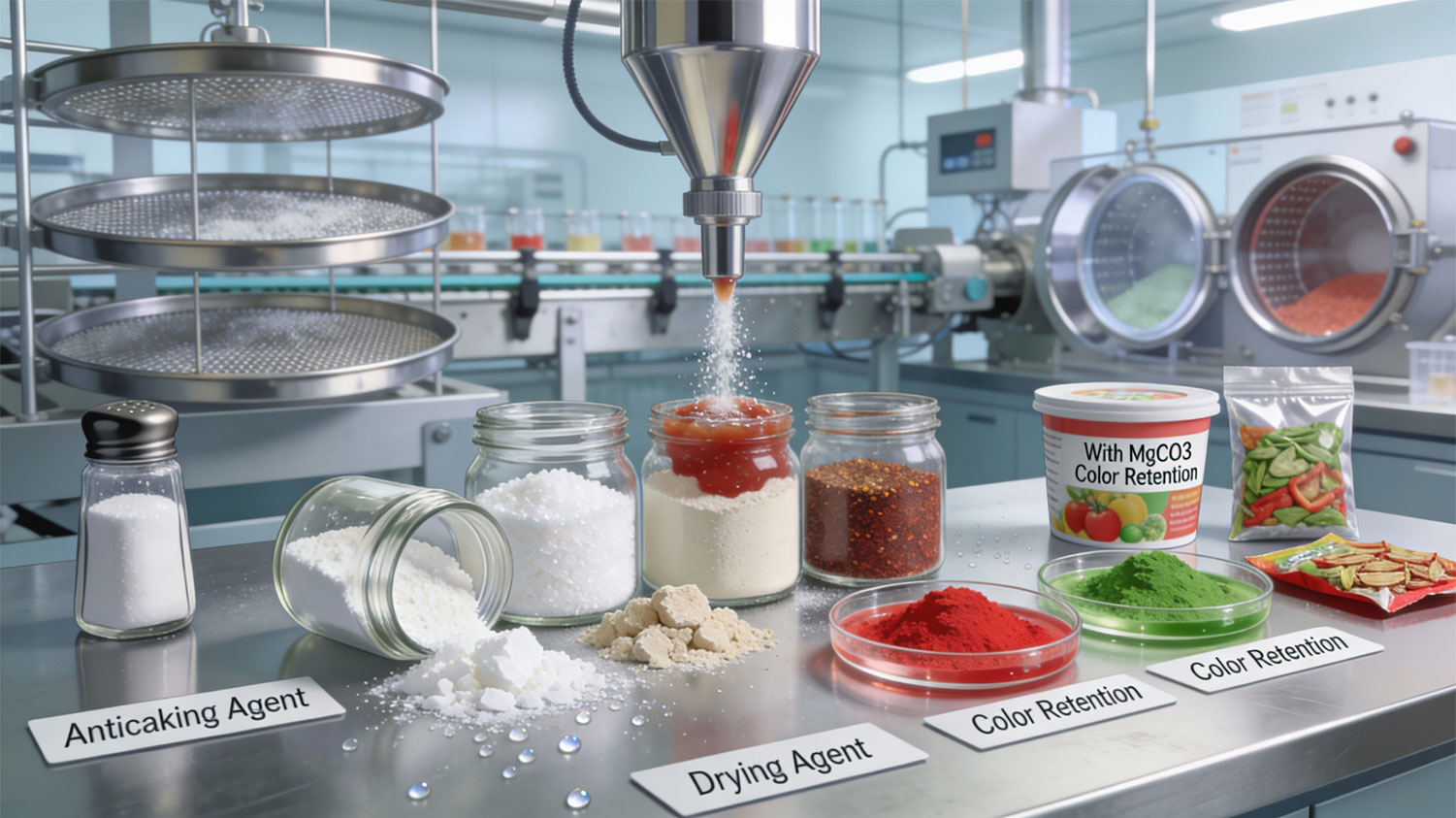
This comprehensive guide examines how this versatile mineral functions as an anticaking agent, drying agent, and color retention aid, ensuring that processed foods meet the high standards of modern consumers.
1. Introduction: The Science of Food-Grade Magnesium Carbonate
Magnesium Carbonate is recognized globally as a safe food additive (assigned the international code E504). While its chemical formula is simple—MgCO3—its physical behavior in food matrices is complex and highly beneficial.
For food manufacturers, the “Light” grade produced by AMS Fine Chemicals is particularly valued. Its high surface area and porous structure allow it to interact with moisture and oils in ways that dense fillers cannot.
2. Magnesium Carbonate as an Anticaking Agent
Anticaking agents are substances added to granulated or powdered foods to prevent them from “caking” or clumping. This is critical for products that must remain free-flowing for consumer convenience or automated dispensing.
A. The Mechanism of Action
Caking usually occurs when moisture creates “liquid bridges” between powder particles, causing them to stick together. Magnesium Carbonate prevents this through two methods:
- Physical Barrier: It coats the surface of food particles (like salt or spice particles), preventing them from touching one another directly.
- Moisture Scavenging: It absorbs ambient moisture into its own crystalline structure, keeping the surrounding food particles dry.
B. Common Applications
- Table Salt: One of the most famous uses. It ensures salt pours easily even in the humid coastal climates of India.
- Powdered Spices & Seasonings: Prevents chili powder, turmeric, and garlic powder from forming hard lumps.
- Vending Machine Powders: Ensures coffee and milk powders flow perfectly through automated hoppers without clogging.
3. Function as a Drying Agent and Moisture Regulator
Beyond preventing clumps, Magnesium Carbonate acts as a functional drying agent. In the food industry, “water activity” (aw) is a key metric for safety. High water activity leads to mold growth and bacterial spoilage.
A. Stability in High-Humidity Environments
Manufacturers in Gujarat and other tropical regions face the challenge of high humidity during production. Incorporating AMS Fine Chemicals’ Magnesium Carbonate helps:
- Stabilize Hygroscopic Ingredients: Ingredients like sugar or fruit powders that naturally “suck” moisture from the air are stabilized.
- Extend Shelf Life: By locking away moisture, the additive slows down the degradation of flavors and textures.
4. Color Retention and pH Stabilization
The visual appeal of food is often the first thing a consumer notices. Magnesium Carbonate plays a subtle but vital role in maintaining the “natural” look of processed items.
A. Buffering pH for Color Stability
Many natural food pigments are pH-sensitive. For example, the green color in vegetables (chlorophyll) can turn a dull brown in acidic conditions. As a mild alkaline agent, MgCO3 helps:
- Neutralize Organic Acids: It prevents the pH from dropping too low during processing, preserving the vibrant colors of canned or frozen vegetables.
- Cacao Processing (Dutched Cocoa): It is often used in the “Dutching” process of cocoa to darken the color and mellow the flavor by neutralizing acidity.
B. Prevention of Discoloration
By acting as a barrier against oxidation, it helps prevent the “browning” effect seen in some powdered fruit and vegetable extracts.
5. Industrial Grades and Regulatory Compliance
At AMS Fine Chemicals, we understand that food safety is non-negotiable. Our Magnesium Carbonate is manufactured to meet stringent global standards:
| Regulatory Body | Standards Met | Application |
| FSSAI | Food Safety & Standards India | Domestic Food Production |
| FCC | Food Chemicals Codex | International Export Grade |
| E504 (i) | European Food Safety Authority | EU Compliance |
| Halal/Kosher | Industry Standards | Specialized Dietary Requirements |
Physical Forms for Food Use:
- Light Magnesium Carbonate: The preferred form for anticaking due to its high volume and surface area.
- Granular Forms: Used in specific mineral fortification applications.
6. Why Source from AMS Fine Chemicals (Bhavnagar)?
Bhavnagar has long been a hub for mineral excellence. AMS Fine Chemicals combines this geographical advantage with modern technology:
- High Purity: Our process removes heavy metals and impurities to levels far below the maximum allowed by the FCC.
- Texture Control: We can customize the particle size to ensure it blends seamlessly with your specific food product without changing the “mouthfeel.”
- Reliable Supply: With a robust production capacity, we serve small-scale spice blenders and large-scale multinational food corporations alike.
7. Conclusion: The “Invisible” Hero of the Food Industry
While consumers rarely look for Magnesium Carbonate on a label, they appreciate the results: salt that pours, spices that sprinkle, and food that looks as fresh as the day it was packed. For manufacturers, it is a cost-effective, multi-functional tool that solves three problems with one ingredient.