Magnesium Hydroxide (Mg(OH)₂) is a powerful yet gentle inorganic compound that has revolutionized industrial wastewater treatment, flame retardancy, and pharmaceuticals. Often referred to in its liquid form as “Milk of Magnesia,” this versatile chemical is the safer, more environmentally friendly alternative to harsh alkalis like caustic soda.
In this comprehensive guide, AMS Fine Chemicals—a leading manufacturer based in Bhavnagar, Gujarat—provides a technical deep dive into the properties, grades, and the significant safety advantages of Magnesium Hydroxide.
1. What Is Magnesium Hydroxide?
Magnesium Hydroxide is a white, odorless solid that occurs naturally as the mineral brucite. Chemically, it is a “weak base,” meaning it does not fully dissociate in water, which is the secret behind its unique safety profile.
Physical and Chemical Properties
- Chemical Formula: Mg(OH)₂
- Molar Mass: 58.31 g/mol
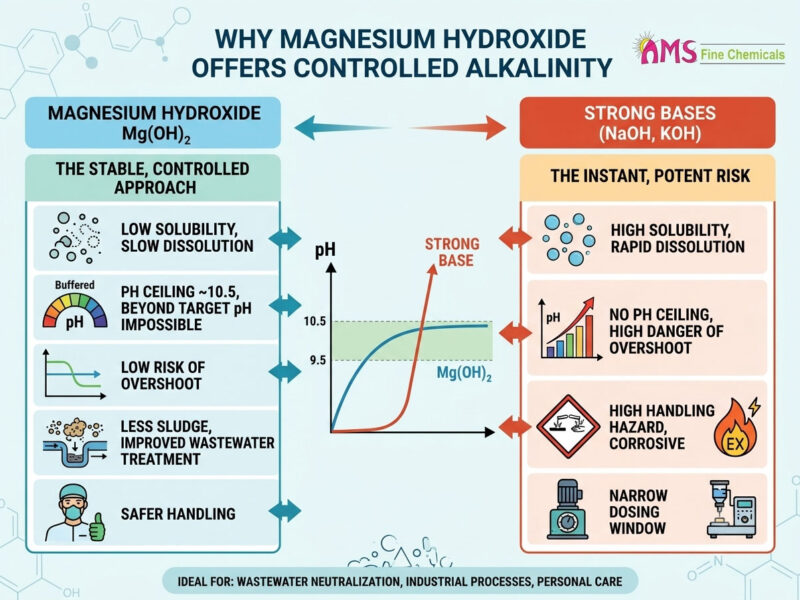
- Solubility: Very low in water (0.0009 g/100 mL), which allows it to act as a “buffer” rather than a volatile reactant.
- Thermal Stability: It remains stable up to 330°C, at which point it decomposes into Magnesium Oxide and water vapor—a property exploited in fire safety.
- pH Level: A saturated solution maintains a pH of approximately 10.5, providing alkalinity without reaching the dangerous levels of 13+ found in caustic soda.
2. Grades of Magnesium Hydroxide
Not all Magnesium Hydroxide is created equal. The application dictates whether a manufacturer requires the naturally mined form or a high-purity synthetic version.
A. Brucite (Natural Grade)
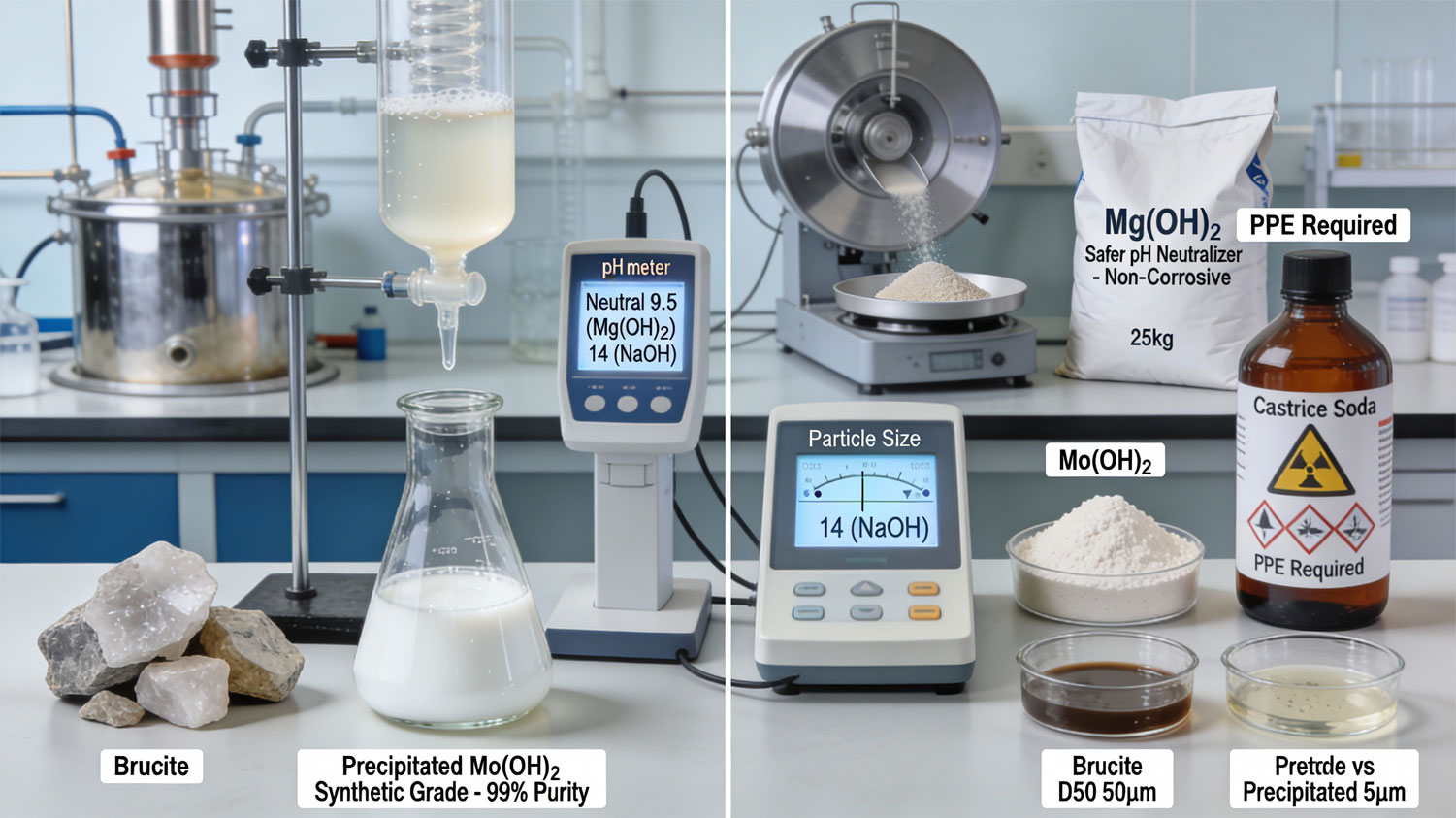
Brucite is the mineral form of Mg(OH)₂ It is typically mined and then ground into various mesh sizes.
- Characteristics: Contains natural trace minerals; cost-effective for large-scale industrial use.
- Best For: Soil pH adjustment, heavy metal precipitation in mining, and basic refractory use.
B. Precipitated Magnesium Hydroxide (Synthetic/High Purity)
This grade is produced through the reaction of magnesium salts with an alkali or through the hydration of high-purity magnesium oxide. AMS Fine Chemicals specializes in this grade for demanding sectors.
- Characteristics: Ultra-high purity, controlled particle size, and high whiteness index.
- Best For: * Flame Retardants: Used in wire and cable insulation.
- Pharmaceuticals: Active ingredient in antacids and laxatives.
- Food Additives: Used as a color retention agent or pH regulator.
3. The Industrial “Safety Revolution”: Mg(OH)₂ vs. Caustic Soda (NaOH)
For decades, Caustic Soda (Sodium Hydroxide) was the standard for pH neutralization. However, the industry is rapidly shifting toward Magnesium Hydroxide due to its superior safety and economic profile.
A. Non-Corrosive Nature
Caustic soda is highly corrosive to human tissue and industrial equipment. A small splash can cause permanent chemical burns. In contrast, Magnesium Hydroxide is non-caustic. It is safe to handle and significantly reduces the risk of workplace injuries.
B. The “Self-Buffering” pH Control
One of the biggest risks with Caustic Soda is “pH overshooting.” Because NaOH is a strong base, adding even a small excess can send the pH of a waste stream to 12 or 13, killing beneficial bacteria in treatment plants.
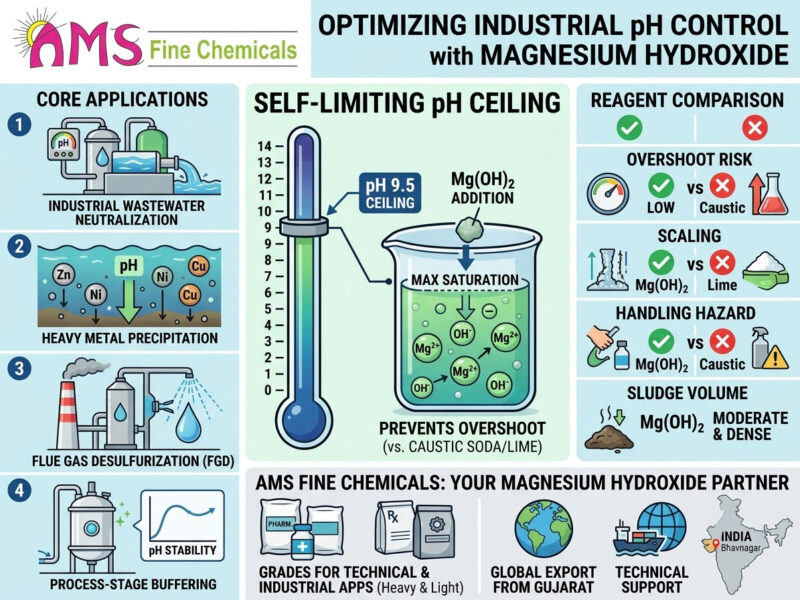
- Magnesium Hydroxide has a limited solubility. It only dissolves as it is “needed” by the acid. This creates a natural buffer, ensuring the pH rarely exceeds 9.0, protecting biological treatment systems.
C. Sludge Volume and Handling
In wastewater treatment, Mg(OH)₂ creates a much denser, more compact sludge compared to Caustic Soda or Lime.
- The Advantage: Denser sludge means lower disposal costs and easier filtration, significantly improving the “total cost of ownership” for treatment plants.
| Feature | Magnesium Hydroxide | Caustic Soda (NaOH) |
| Handling Safety | Safe/Non-corrosive | Highly Dangerous/Corrosive |
| pH Control | Self-buffering (max ~9.5) | Rapid Spiking (up to 14) |
| Metals Removal | High efficiency | Requires precise control |
| Environmental Impact | Beneficial to soil/water | Can be toxic in excess |
4. Key Applications
A. Flame Retardant (NHFR)
In the plastics and cable industries, Mg(OH)₂ is a premier Non-Halogenated Flame Retardant. When a fire occurs, it undergoes an endothermic decomposition:
Mg(OH)₂ + Heat > MgO + H2O
The released water vapor cools the flame, while the MgO forms a protective “char” layer that prevents further combustion.
B. Wastewater Neutralization
Used by textile, plating, and chemical industries in Gujarat and beyond to neutralize acidic effluents and precipitate heavy metals.
C. Marine Scrubber Systems
Used in ships to neutralize sulfur oxides (SOx) in exhaust gases, helping the shipping industry meet global MARPOL environmental standards.
5. Why Choose AMS Fine Chemicals (Bhavnagar)?
Located in the chemical manufacturing heartland of Gujarat, AMS Fine Chemicals leverages the region’s rich mineral resources and technical expertise.
- Consistent Particle Size: We ensure our Mg(OH)₂ has the perfect particle distribution for stable suspensions.
- High Purity: Our precipitated grades are free from heavy metal contamination, making them suitable for pharmaceutical use.
- Custom Slurry Solutions: We provide both dry powder and pre-mixed slurries for easy industrial integration.
Conclusion
Magnesium Hydroxide is the “Green Alkali.” Whether you are looking for a safer way to treat your facility’s wastewater or an eco-friendly flame retardant for your polymer compounds, Mg(OH)₂ provides the performance you need without the hazards of traditional chemicals.